Thank you to Rasa Rudaitienė who is a PhD student and Social Inclusion and Leadership Research Laboratory member at Mykolas Romeris University in Lithuania and has written this blog post reflecting on her Short-Term Scientific Mission. Her research focuses on social inclusion, career participation, and disability studies and she is an active participant in the BOPALIM and COCAG COST actions as well as a member of the PSGENEQ gender equality project.
One of the greatest strengths of the COST Action COCAG network is its ability to bring together researchers from different countries to discuss career issues that extend beyond national contexts. My recent Short-Term Scientific Mission (STSM) at Universiti Sains Malaysia was an excellent example of how international collaboration can create space for new ideas and critical dialogue.
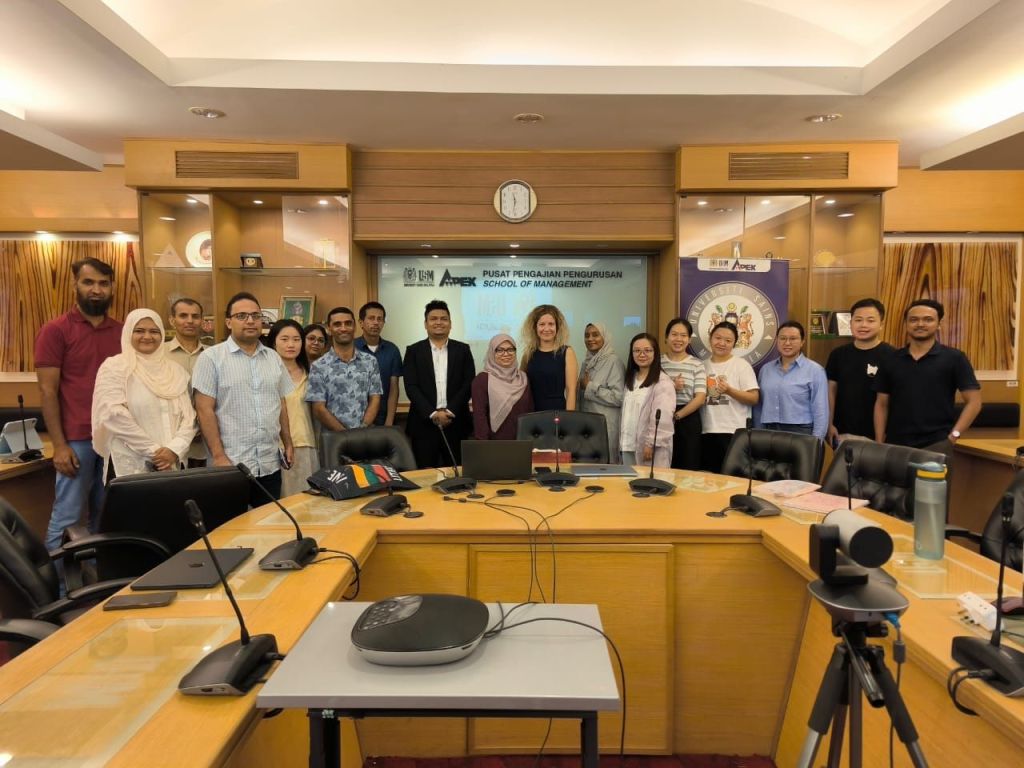
During the STSM, I worked with colleagues to develop the foundations of a joint review paper on career accessibility for persons with disabilities, comparing perspectives from Lithuania and Malaysia. Rather than focusing only on individual career development, our discussions explored career accessibility through a critical lens, asking how institutional structures, social policies, labor markets, and cultural contexts shape career opportunities for people with disabilities.
Although Lithuania and Malaysia differ in their welfare systems, labor markets, and policy environments, many of issues proved to be surprisingly similar. Across both contexts, questions emerged about inclusion, equal opportunities, accessibility, and the extent to which career systems respond to structural inequalities.
One of the most valuable outcomes of the STSM was opportunity to exchange perspectives across different cultural and academic contexts. Critical discussions with colleagues challenged assumptions, highlighted alternative interpretations of career accessibility, and demonstrated how comparative research can deepen our understanding of contemporary career issues.
For me, as an early-career researcher, the mobility was an important opportunity to develop international research experience, receive feedback on my work, and build long-term collaborations. Together, we agreed on a roadmap for continuing our joint research, with the goal of publishing a review paper comparing career accessibility for persons with disabilities in Lithuania and Malaysia.
As career researchers, we often work within our own national contexts. The STSM reminded me that some of the most meaningful conversations begin when different perspectives meet. By bringing together diverse experiences and critical viewpoints, international collaboration helps us better understand career inequalities and contributes to developing more inclusive approaches to career research, policy, and practice.


[…] Read the full blog post to learn more about the project https://cocag.co.uk/2026/07/08/from-lithuania-to-malaysia-building-critical-conversations-on-career-… […]
LikeLike