In this post Marcelo Afonso Ribeiro discusses how the coronavirus is changing work, career and career guidance in Brazil. It builds on his previous piece in which he offered reflections on the pandemic from Latin America.

Fiona Christie, Eileen Cunningham, and Kath Houston’s article plays an important role in discussing how the global crisis generated by the coronavirus is changing the way that we work and society gives meaning to work in the United Kingdom. I intend to make a brief and similar discussion, inspired by experiences in the Brazilian context which is characterised by high levels of social inequalities, informality, unemployment, and restricted state support.
The pandemic is moving forward and it is far from being controlled in some parts of the world. It has been particularly destructive in the American continent due to the negativism of governments and populations and the predominance of individualised positions over collective ones.
The crisis is an opportune time for radicalising and intensifying reflexion that makes us think about the future the most part of the time. After five months of pandemic in Brazil, intense observations of daily life allowed me to understand some key points in the working world, which were standardised before the pandemic in a way that proved to be problematic. In the same vein as Christie and colleagues proposed, I will discuss three dimensions of the social and working world, which have been brought into question by the pandemic, and will impact on the career paths that people are able to construct in the post-pandemic. I want to make it clear that all discussion made is based on the uncertainty of the future, but that is necessary to propose some action planning primarily based in the search of social justice and decent work for all in the new normal. Despite this thought, I tend to agree with André Comte-Sponville who said that ‘those who believe that everything will stay the same are wrong. Those who believe that everything will change are also mistaken.’
Should work be sovereign over other dimensions of life?
In our societies, work has been consolidated as the most important life dimension in comparison to other life dimensions. This prioritisation of paid work generates difficulties in career advancement for many people, including women who need to take care of their families. Due to the social distancing, the pandemic has challenged the centrality of work as normal and hierarchically superior in comparison with other life dimensions.
In the middle and upper classes, the pandemic forced adults, young people and children to experience on-line home-schooling and homeworking and required people to struggle for space and time and mix roles which had previously been consolidated as worlds apart. In the poorest class, the pandemic created a situation in which it was impossible to social distancing due to the reduced space of their houses and the lack of study and leisure options in online way. In general, it forced all family members to go out to be able to work and guarantee their livelihood.
In both situations, the artificiality of the hierarchy of life dimensions was clear. Everyone has multiple social roles and identities; however, the capitalist system has solely given social relevance to work. Christie and colleagues stressed that ‘the current crisis has highlighted the impossibility of seeing work as anything other than profoundly connected to our lives as a whole’ and that ‘the Covid-19 pandemic has led to the collision of our lives as workers, as citizens and as family members (or equivalent)’.
During the pandemic, a false dichotomy emerged as to whether the economy or the health of the population was more important. Before the pandemic, work was sovereign over other life dimensions. In the post-pandemic, will we find a new set of priorities based on interconnection and a new kind of social role balance? It is impossible to know, the most important thing is to learn the lessons left by the pandemic and to reflect on how they shape our future career constructions.
Should we rethink the importance of work?
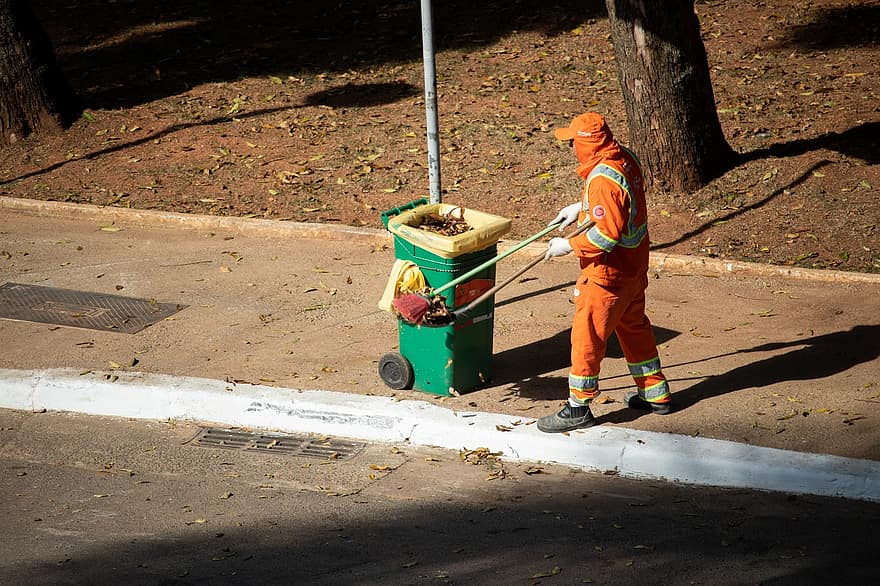
Before the pandemic, there seemed to be a consensus that the most valued and socially recognised jobs were the most qualified for carrying out activities of greater responsibility and decision-making power. However, during the pandemic crisis, health workers at all levels, on the one hand, and low-waged supermarket and drugstore staff and delivery drivers, on the other hand, have played a key role for social maintenance, as Christie and colleagues have also observed in UK.
Will the social value of working activities undergo transformation? Will the social and working world recognise the intrinsic importance of the work rather than linking its value to the required level of qualification? Why should a hospital cleaning worker be less important than a doctor? Would it be possible to fully perform the work of both without the existence of the other? The pandemic has demonstrated the crucial importance of delivery drivers who expose themselves to the risk of becoming infected so that a city continues to operate despite the social distancing rules. Are delivery drivers really hierarchically inferior workers? Should we keep the current social recognition hierarchy of the different types of work? I do not have much hope that this will change, but the pandemic has clearly shown how unfair this classification is.
Should we continue to individualise lives?
The key issue raised by the pandemic crisis was who can individualise life construction? In other words, who is managing to survive due to the social distancing imposed by the pandemic? The predominant logic for career construction was the entrepreneurship, which grounds the conception of the individual career and the worker as an entrepreneur of his/her own work and of himself/herself (a self-made man/woman), as Jean Guichard pointed out. However, who can individualise social protection?
In the Brazilian reality, those who can be entrepreneurs and be responsible for their careers without fully depending on the support and resources of the social context compose a small part of the population. They are the same people who can work remotely and flexibly online. Most people, however, are unable to individualise their lives and needs social regulation and support as the only way to live with minimal conditions. When they must live on their own, this leaves them in a precarious situation and without safe living conditions working in informal or unregulated jobs. In the context of greater social inequality, such as can be found in Brazil, entrepreneurship can mean both flexibility in relation to opportunities and precariousness. The pandemic has shown that coping with the coronavirus demands social and collective responses. This seems to be the most important lesson, which leads us to two future projections. As highlighted by Christie and colleagues, first, we need to strengthen social protection nets considering all as citizens, and, second, we need to give more value to collective working than to competition and individualised projects. This would be a way of breaking the dominant tendency of individualising life.
Concluding…
A greater emphasis on globalisation and productivism (economic development), represented by the economy in the pandemic, or on the defence of basic human rights (social development), represented by the health in the pandemic, truthfully portrays capitalism’s contradictions. What fosters well-being? Being healthy or working? It is a simple answer: both foster well-being in an articulated way assuming the importance of both but without imposing one upon another. The main problem would not be in the answer, but in the question itself. Why should our society choose between health and the economy if both are essential to human well-being? This seems to be the key issue to be debated and it uses to be expressed in the youth’s classic dilemma: Should I choose a job that makes money or should I choose one that makes me happy? These two questions pose a structural problem in the capitalist system as I have already stated: Why can’t I be happy with a fair income? Why should it be incongruous to most people? In this way, the career construction paths in the post-pandemic should be a co-construction of an ongoing process of finding a place in the world that considers others and the world. This process requires a continuous reflexion on the ‘perception of the cost for humanity of our personal achievements’, as well as the fact that ‘we must work for others so we can work for ourselves’, as indicated by Jean Guichard. This should preferably be grounded on critical consciousness that people should understand their own political situation, ‘not just to react to it on a personal level’, as highlighted by Tristram Hooley, Ronald Sultana and Rie Thomsen. Career guidance and counselling should take this into account to be able to foster social justice and social emancipation.


Collectivism is something that has enabled people to cope with this pandemic and, in some cases, literally survive. People have volunteered, checked in on their neighbours and shared their resources. We have been forced to consider the impact on others in every aspect of our day to day lives because of the risk of infection; this has been a huge challenge for those who usually subscribe unthinkingly to the winner takes all mantra of capitalism. Hopefully we can take forward some of the good habits we have been forming and allow our career choices to be influenced to some degree by that new sense of our part in a whole. If we can do that, perhaps the future will be brighter, not just for ourselves but for the communities our actions impact.
LikeLike
Hi Marcelo,
This is an excellent article and it is good. You make some terrific points. Work is sovereign but without health we have no wealth. So, as you say in your conclusion we should not have to chose between both of these because they are both essential for well-being. However, in countries where people have to pay for healthcare tough choices that should never have to be made. Even, in the world’s richest country i.e. the USA prior to Covid-19 many people have died because they can’t afford healthcare and in this crisis many more people all around the world are dying because they can’t afford to pay for healthcare.
I believe we should rethink the importance of work. Without, refuse workers and cleaners the doctors and nurses would not stand a chance in terms of controlling the virus as cleanliness and disinfection of the home and public spaces. Even, in times when there is no virus cleaners are essential in promoting public health. This virus has taught us that cleaners, food production workers, delivery drivers, supermarket staff, nurses and doctors, care home personnel etc. are important! They are and they always were!
I agree with you that it is imperative to strengthen social protection as people need a safety net all over the world. Also, collective working is important too! No man or woman is an island!
Emma
LikeLike
One of the key questions is how far careers workers have a role in reflecting social and community needs. Such a decision moves us a way from individualistic ways of thinking (from ‘what do you want to do’ to ‘what does the community need you to do’). But, in doing this there is also a danger that it subjugates the individuals need to that of the community, which may be felt as a new kind of oppression. As you say, one of the ways to address this is by ensuring that jobs which meet the community need are well recognised and compensated, as this will make them desirable forms of decent work. Helping people to think critically about the relationship between career choice, occupational responsibilities, status and reward is an important role that careers workers can play.
LikeLike