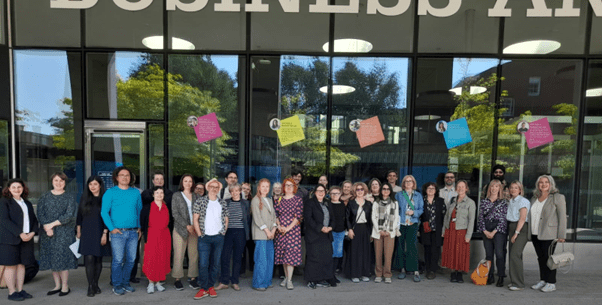
The COCAG launch event Career and career guidance in Europe: Assessing strengths and addressing gaps took place on the 20th and 21st May 2025 at the Manchester Metropolitan University Business School.
Day 1 keynote
The event kicked off with a keynote from Professor Kim Allen and Dr Kirsty Finn discussing women’s experiences of earning while learning Earning while learning (EwL): Student jobs, gender & future work imaginaries. The slides can be found below and you can check out this post for a summary and more information about their research.
Working group presentations
The day followed with the leaders of each working group presenting the main thematic strand of their respective group.
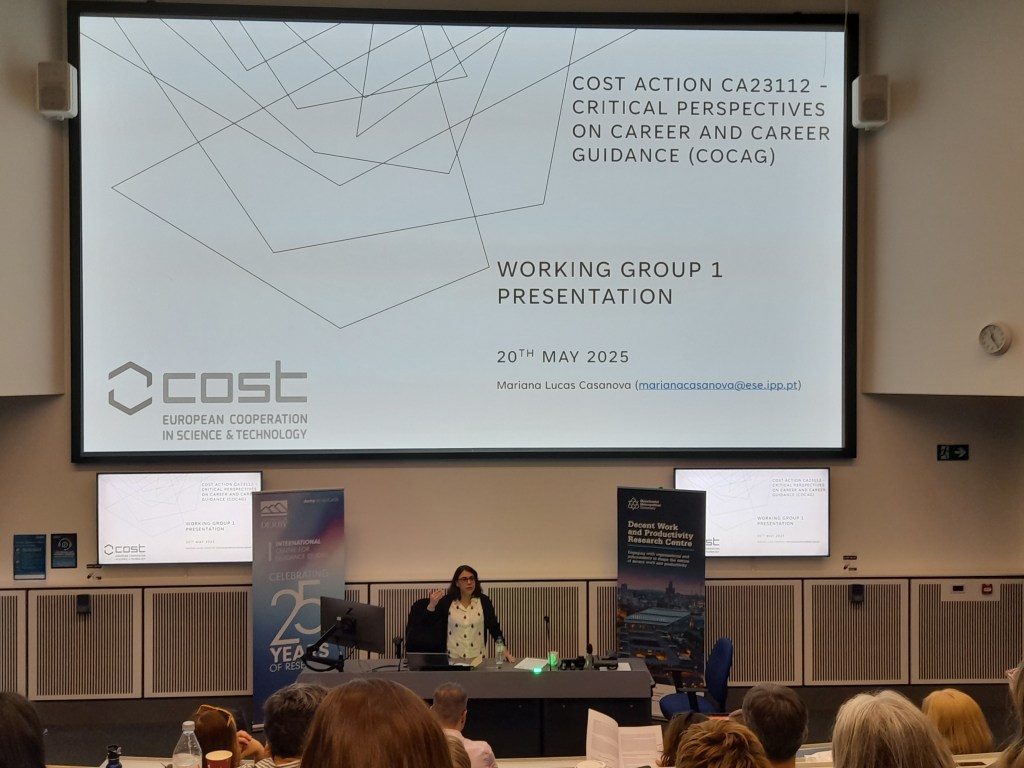
Working group 1: The challenges and changes in career in the contemporary world.
Key points:
- Working group 1 explores how the shifts in the global political economy manifest through individuals’ experience of work and career.
- With various conceptualisations of factors within work and career, such as policy and individual’s experience, it is important to ask who do they benefit
- Subgroups:
- The impact of the socioeconomic and political organisation of the labour market on the experience of work and on career development
- The impact of automation, digitalization, robotization, AI on the labour market, the experience of work and career development
- The meaning and value of work and the future of work and career development
- Work and career development in relation to geographical space and place
- Inclusion and social justice
- The experience of work and career in specific contexts
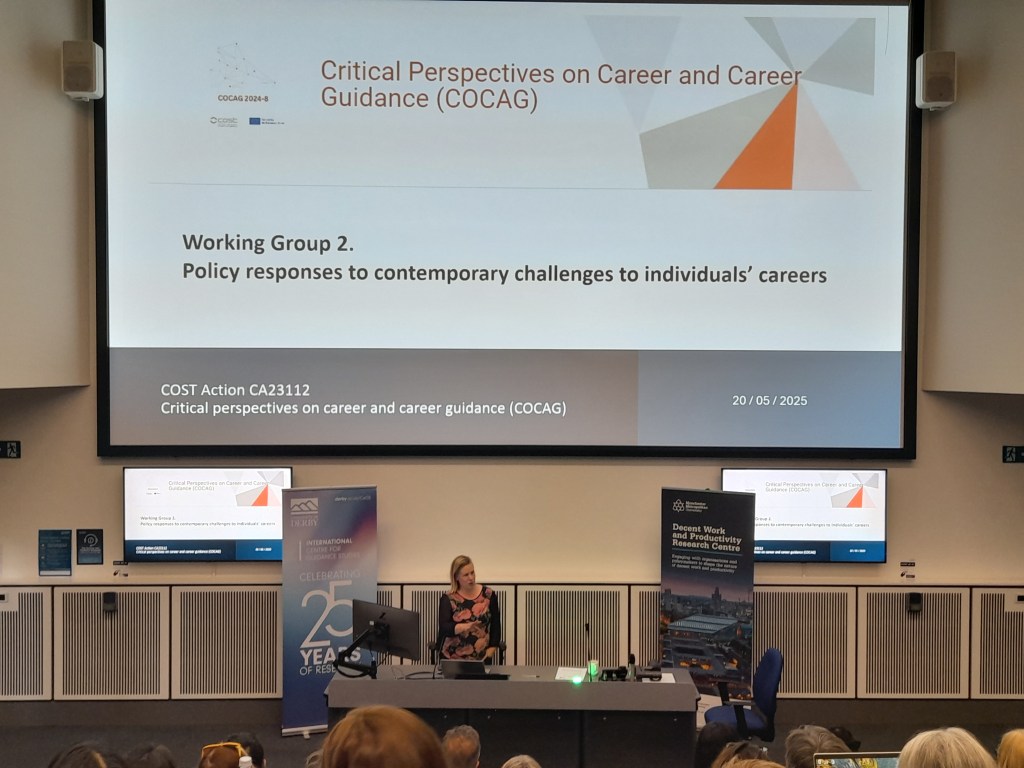
Working group 2: Policy responses to contemporary challenges to individuals’ careers.
Key points:
- Working group 2 explores policymaker’s engagement in a range of different initiatives designed to support or shape the careers of individuals
- Examples of criticisms of career related policy: an overemphasis on personal responsibilities rather than employer responsibilities, economy before people, flexibility at the expense of security, and lack of decent and meaningful work.
- Thematic areas that have arisen:
- How to effectively influence careers related public policy?
- Impact assessment of career guidance
- Public policy responses to demographic and societal changes and challenges
- Mapping current policy trends
- Develop and build on the work of the ELGPN
- Developing critical policy principles for the future
Working group 3: Critical practice in career guidance
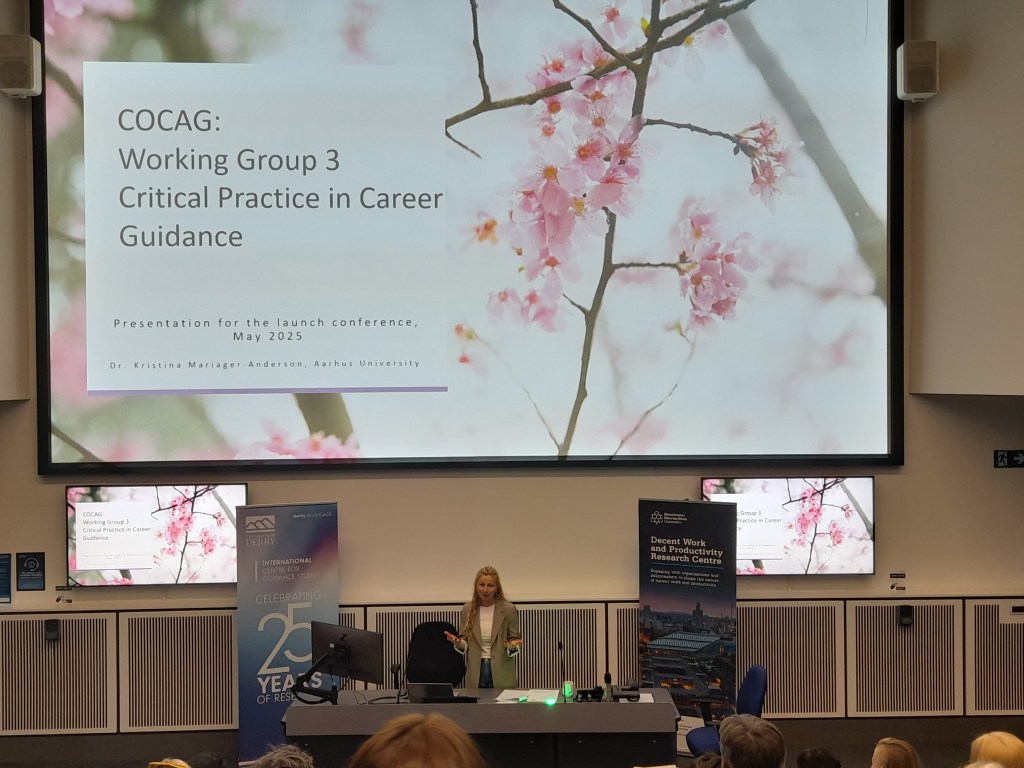
Key points:
- Working group 3 is practice-orientated and application focused with practitioner involvement aiming to connect theoretical insights with practical challenges.
- Practitioners face complex challenges, such as socio-political changes and technological transformations, requiring the need for critical tools to navigate these complexities.
- Sub themes:
- Technology and digital transformation
- Critical professional practice and development
- Educational settings and life stage transitions
- Cultural, contextual and community-based influences
- Methodologies and knowledge production
- Inclusive and social justice approaches
Day 2 keynote
The second day began with a keynote from Action Chair Professor Tristram Hooley exploring career, career guidance and the different lenses of critical perspective Taking a critical perspective on career and career guidance: Setting the conceptual framework for COCAG.

Key points:
- Career is not a single decision of choosing one job over another, careers are continuously influenced by social and political factors, and is where our life, learning and work intertwine.
- Career guidance takes a wide range of forms drawing on diverse theoretical traditions to support individuals and groups discover more about work, leisure and learning.
- Critical perspective is not inherently negative but rather analytical and can be viewed from various lenses such as Marxism, Feminism and Queer theory.
- The following themes emerged across the three working groups; careers in crisis, lifelong and lifewide learning in career, socio-technological careering, difference and career, and career imaginaries
The day then concluded with discussions in small groups looking at the progress of the Action and exploring possibilities for the development of a book project.
 Critical Perspectives on Career and Career Guidance (COCAG)