At the recent Career and Career Guidance in Europe: Assessing Strengths and Addressing Gaps conference, organised by the COCAG COST Action we were very privileged to have a keynote from Kim Allen and Kirsty Finn about their project which explores womens’ experiences of earning while learning.
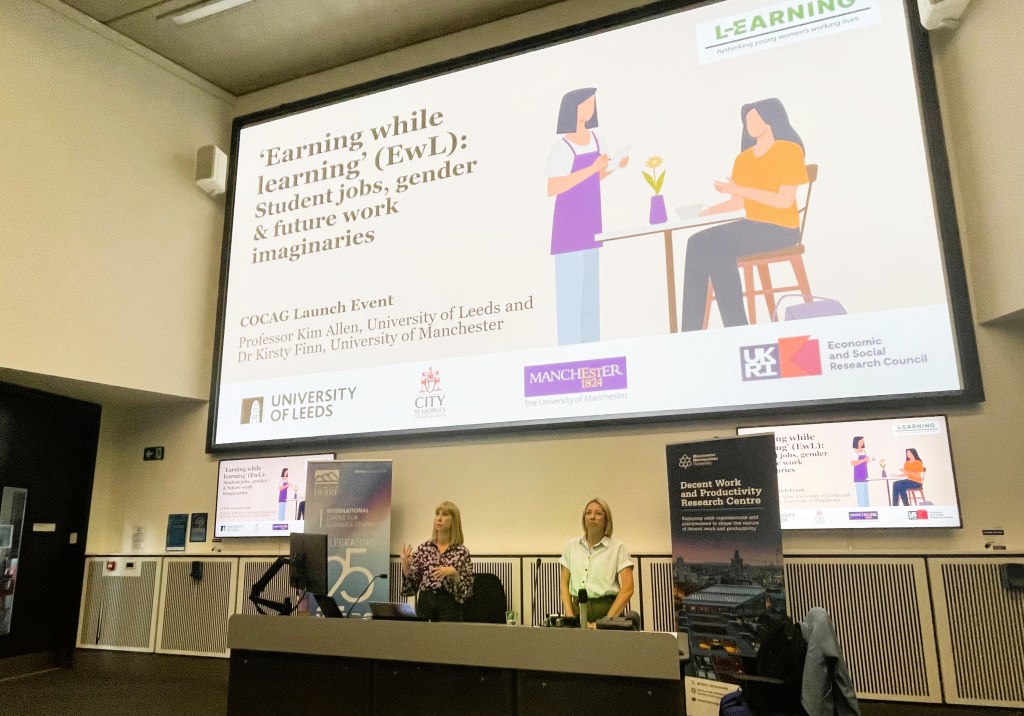
Following on from their keynote, we wanted to bring COST participants and other readers of this website further information about this ESRC-funded study L-earning: Rethinking Young Women’s Working Lives.
The project explores the fact that most young people do paid work before they finish school or college. For those who continue their studies at university, paid work is increasingly common due to rising student fees and a spiralling cost of living crisis. Girls and young women are especially likely to undertake paid work alongside their studies. Common jobs include babysitter, retail cashier and waitress, and – increasingly – many engage in income-generating activities involving digital platforms such as Etsy, Depop and Instagram.
The project explores the heretofore invisibilised experiences of paid work that young women accrue before they officially transition from education, and which have been under-theorised in studies of gender and work to date. In doing so it will advance understandings of how the work of very young workers, including that undertaken alongside learning, contributes to gendered inequality in the workplace.
Research briefings
The project has recently published a series of research briefings on ‘Earning While Learning: student employment’.
The research and recommendations address a number of areas which connect to the work and interests of COCAG members and speaks to many of the key thematic areas being addressed by the working groups. In particular these highlights the need for and value of careers guidance and practice to engage young people in critical conversations about their experiences of paid work / Earning while Learning – including issues of pay, rights at work, and gender and sexual harassment.
Key relevant findings include:
- Paid work is a reality for the vast majority of young people in education and is a particular issue for young women who are about 50% more likely than men to engage in paid work while studying.
- Legal pay requirements are not consistently met, with student workers often paid below national minimum wage levels for their age.
- Students often feel they have little control over hours, schedule and shift patterns.
- Students lack knowledge of rights or legal pay rates. Even where they are aware of their rights, student workers feel unable to assert these.
- Student workers often feel powerless in the workplace and sometimes unsafe.
- Young women experience widespread sexual harassment at work.
There will be a webinar to launch the briefings on Tuesday 3rd June at 12:00 until 12.45. Click here to sign up and find out more.
 Critical Perspectives on Career and Career Guidance (COCAG)
[…] jobs, gender & future work imaginaries. The slides can be found below and you can check out this post for a summary and more information about their […]
LikeLike