As careers become less predictable and more influenced by change, the idea of a fixed ‘path’ can sometimes feel limiting. Carme Martínez-Roca explores this perspective, questioning whether traditional metaphors reflect the complexities people navigate. She introduces an alternative way of thinking – a personalised marine navigation system – that acknowledges individual, interpersonal and structural circumstances and the need to have the competencies and support to face and reduce them:
I have always avoided the term ‘path’ in the guidance work we implement because I consider it to be narrow, restrictive and frustrating. The reasons to see it like that are various: the person who cannot follow the path feels like a failure; the term is sometimes used as a synonym of trajectory when it is not; it takes us to talk about linear and non-linear paths as if we must justify that the latter are not worse than the first… Given the VUCA world we are living in, that is, given the present volatile society, where change is an increasingly accelerated constant and uncertainty the only certitude, where the existing complexity makes it difficult to make decisions effective and ambiguity to even take them, it is necessary to rethink this metaphor to develop guidance practices that offer 21st century tools for personal fulfillment, social equity and environmentalism. Antonio Machado’s poem offers inspiration to do so:
Traveler, there is no path; you make your own path as you walk
Traveler, there is no path; only ship’s wakes on the sea
If there is no path but there is a sea, what the people we work with need is a personalized marine navigation system that empowers them to:
- Define what options do they have; what is it that they are considering navigating towards: What meaningful horizons are they contemplating?
- Analyze their current situation in a comprehensive way. That is, establish what personal, interpersonal, structural, health or functional diversity strengths and barriers favor or prevent navigation: What type of boat are they and what are the conditions of the sea?
- Identify the competencies and support they need to make decisions and carry them out: How to take advantage of the strengths their boat has? What help do they need to navigate, together with others, to face and improve the conditions of the sea?
- Answer the questions: What can I do now? What support do I need to do it? Who else can I do it with? How do I establish and use a personalized navigation system?
We have been using this metaphor in diverse Adult Education Centers of Catalonia, Spain, since October 2024 and the results are spectacular. Specifically, we have used it in a workshop called “What to do when you finish your current studies? How to make the best possible decision.”
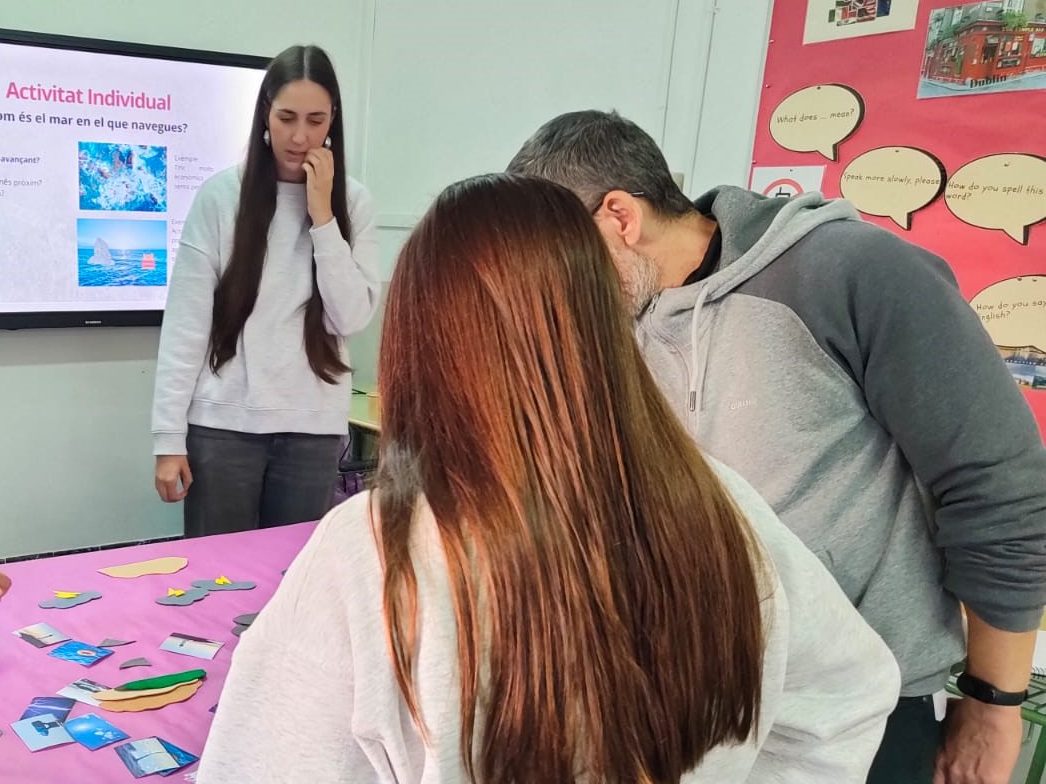
This activity aims for its participants to identify the four steps indicated above – meaningful horizons, what is my boat, what are the conditions of the sea, how to establish and use a personalized navigation system – and they are presented with the guidance service that can mentor them. The results obtained in the workshops establish that the metaphor is understandable, functional and motivating, as illustrated by the following examples obtained through the feedback provided by participants:
- “It has helped me realize what was holding me back and that I have more strengths than I thought I had” – 21-year-old woman
- “I realized by drawing the ship that I am not what I think I am. In fact, I would have had to represent myself as an icebreaker, because although it is difficult for me to recognize it, no matter what happens, I always end up moving forward towards my goals” – 40-year-old man.
- “My cargo ship has too much cargo on it, I need to find something to help me unload” – 34-year-old woman
- “It helps you connect with colleagues and encourage each other” – 32-year-old woman
We thus believe that this metaphor may contribute to opening the range of future possibilities that people can envision for themselves. It may also help them to identify more of their strengths, better manage uncertainty, raise awareness of the structural situations they face, that they are not alone nor are they the only ones doing it, and that asking for help is not a weakness. We consider that this metaphor may contribute to a social justice perspective of guidance in a way that is meaningful for students, that allows them to create hope and to act on it.
𝗡𝗢 𝗘𝗦 𝗘𝗟 𝗜𝗧𝗜𝗡𝗘𝗥𝗔𝗥𝗜𝗢, 𝗘𝗦 𝗘𝗟 𝗦𝗜𝗦𝗧𝗘𝗠𝗔 𝗗𝗘 𝗡𝗔𝗩𝗘𝗚𝗔𝗖𝗜Ó𝗡
Siempre he huido del término itinerario en nuestro trabajo de orientación porque considero que es estrecho, que encorseta y frustra, porque la persona que no consigue transitarlo se siente fracasada, porque a veces se utiliza como sinónimo de trayectoria cuando no lo es, porque nos lleva a hablar de los lineales y los no lineales como si tuviéramos que justificar que los segundos no son peores… En un mundo VICA como el actual, es decir, en una sociedad volátil, donde el cambio es una constante cada vez más acelerada, la incertidumbre la única certeza, donde la complejidad existente dificulta hacer efectivas las decisiones y la ambigüedad tomarlas, creo que es necesario repensar esta metáfora para desarrollar prácticas de orientación que ofrezcan herramientas del siglo XXI para la realización personal, la equidad social i el ecologismo. El poema de Antonio Machado ofrece inspiración para hacerlo:
𝑪𝒂𝒎𝒊𝒏𝒂𝒏𝒕𝒆 𝒏𝒐 𝒉𝒂𝒚 𝒄𝒂𝒎𝒊𝒏𝒐, 𝒔𝒆 𝒉𝒂𝒄𝒆 𝒄𝒂𝒎𝒊𝒏𝒐 𝒂𝒍 𝒂𝒏𝒅𝒂𝒓.
𝑪𝒂𝒎𝒊𝒏𝒂𝒏𝒕𝒆 𝒏𝒐 𝒉𝒂𝒚 𝒄𝒂𝒎𝒊𝒏𝒐, 𝒔𝒐𝒍𝒐 𝒆𝒔𝒕𝒆𝒍𝒂𝒔 𝒆𝒏 𝒍𝒂 𝒎𝒂𝒓.
𝗦𝗶 𝗻𝗼 𝗵𝗮𝘆 𝗰𝗮𝗺𝗶𝗻𝗼 𝗽𝗲𝗿𝗼 𝗵𝗮𝘆 𝗺𝗮𝗿, 𝗹𝗼 𝗾𝘂𝗲 𝗻𝗲𝗰𝗲𝘀𝗶𝘁𝗮𝗻 𝗹𝗮𝘀 𝗽𝗲𝗿𝘀𝗼𝗻𝗮𝘀 𝗰𝗼𝗻 𝗾𝘂𝗶𝗲𝗻 𝘁𝗿𝗮𝗯𝗮𝗷𝗮𝗺𝗼𝘀 𝗲𝘀 𝘂𝗻 𝘀𝗶𝘀𝘁𝗲𝗺𝗮 𝗱𝗲 𝗻𝗮𝘃𝗲𝗴𝗮𝗰𝗶ó𝗻 𝗽𝗲𝗿𝘀𝗼𝗻𝗮𝗹𝗶𝘇𝗮𝗱𝗼 que les permita:
- Determinar cuáles son sus opciones, aquello hacia lo que quieren navegar: 𝗰𝘂á𝗹 𝗲𝘀 𝘀𝘂 𝗵𝗼𝗿𝗶𝘇𝗼𝗻𝘁𝗲 𝗱𝗲 𝘀𝗲𝗻𝘁𝗶𝗱𝗼.
- Identificar su situación actual de forma integral, es decir, establecer qué fortalezas y barreras intrapersonales, interpersonales, contextuales, de salud o de diversidad funcional favorecen o impiden su navegación: 𝗰𝘂á𝗹 𝗲𝘀 𝘀𝘂 𝗯𝗮𝗿𝗰𝗼 𝘆 𝗰ó𝗺𝗼 𝗲𝘀𝘁á 𝗲𝗹 𝗺𝗮𝗿.
- Definir qué competencias y soportes necesitan para tomar decisiones y hacerlas efectivas: cómo aprovechar y fortalecer las ventajas que tiene su barco y qué ayuda necesitan para navegar, acompañados y acompañando, de modo que afronten y mejoren las condiciones del mar.
- Responder a las preguntas: ¿Qué puedo hacer ahora? ¿Qué soportes necesito para hacerlo? ¿Con quién más puedo hacerlo? Cómo establecer y utilizar un sistema de navegación personalizado
Este año hemos empezado a utilizar esta metáfora en Centros de Formación de Personas Adultas de Catalunya, España y los resultados son espectaculares. Específicamente, la hemos utilizado en un taller denominado “¿Después de estos estudios qué? Cómo tomar la mejor decisión posible”. Esta actividad tiene por objetivo que sus participantes identifiquen los cuatro pasos señalados anteriormente – horizontes de sentido, cuál es mi barco, cómo está el mar, cómo establecer y utilizar un sistema de navegación personalizado – y se les presenta el servicio de orientación a través del cual acompañarlos en el proceso. Los resultados obtenidos en los talleres permiten establecer que la metáfora es comprensible, significativa, funcional y motivadora, como así lo ilustran los siguientes ejemplos del feedback proporcionado por participantes:
- “Me ha servido para ver lo que me estaba frenando y que tengo más cosas positivas de las que a veces me pienso”- mujer de 21 años
- “Me he dado cuenta dibujando el barco que no soy tal y como pienso, en realidad tendría que ser como un rompehielos, porque aunque me cuesta reconocerlo, siempre pase lo que pase voy hacia adelante a por mis objetivos” – hombre de 40 años
- “Mi barco de carga tiene demasiada carga encima, necesito buscar algo que me ayude a descargar” – mujer de 34 años
- “Te ayuda a conectar con los compañeros y a animarnos mutuamente” – mujer de 32 años
Consideramos que esta metáfora puede contribuir a que las personas abran el abanico de sus posibilidades futuras, identifiquen más fortalezas y gestionen mejor la incertidumbre; a que se den cuenta de las situaciones estructurales a afrontar, de que no están solos para hacerlo y de que pedir ayuda no es una debilidad. Con todo ello, trabajamos desde una perspectiva de justicia social de la orientación con una metáfora que resulta significativa para los estudiantes, les permite crear esperanza y actuar en consecuencia.
 Critical Perspectives on Career and Career Guidance (COCAG)