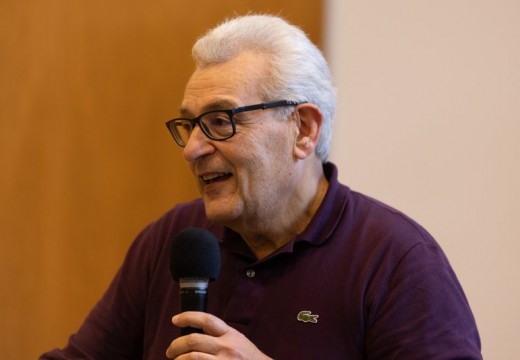
Following the sad death of Ronald Sultana on Friday 24th November 2023, his friends and colleagues, Rie Thomsen and Tristram Hooley reflect on his life and legacy.
The worlds of education and career guidance are in shock at the loss of Ronald Sultana. His contribution to these fields was unmatched and we are sure much more will be written in the future about his numerous contributions to all of the areas that he has worked in, from educational sociology to island studies, to the study of the Mediterranean region and, of course, careers education and guidance. But, in this post we wanted to focus on Ronald’s unique contribution to the pursuit of social justice through career education and guidance. And, we also wanted to offer some personal reflections and say goodbye to our friend and collaborator.
It isn’t an exaggeration to say that Ronald has been the pivotal figure in discussions about career guidance and social justice. As far back as 1985 Ronald was drawing on critical pedagogy, writing about Heny Giroux and then in his 1987 PhD dissertation discussing ‘schooling for work’ in New Zealand and finding hope and possibilities for contestation in forms of education where others only saw indoctrination. These themes continued through out his career where he wrote about critical education, social class, diversity and the influence of power on education.
Much of this work took on more urgency after the global financial crisis in 2008. Increasingly Ronald started to talk about neoliberalism, rights and politics and to position career guidance as a mechanism for social inclusion. And then in 2014 he produced an explosion of writing discussing social justice in neoliberal times, arguing for an optimism of the will in such times and setting out a typology of career guidance which accorded a central place to an emancipatory tradition in his article Rousseau’s chains.
Career guidance for social justice as a movement
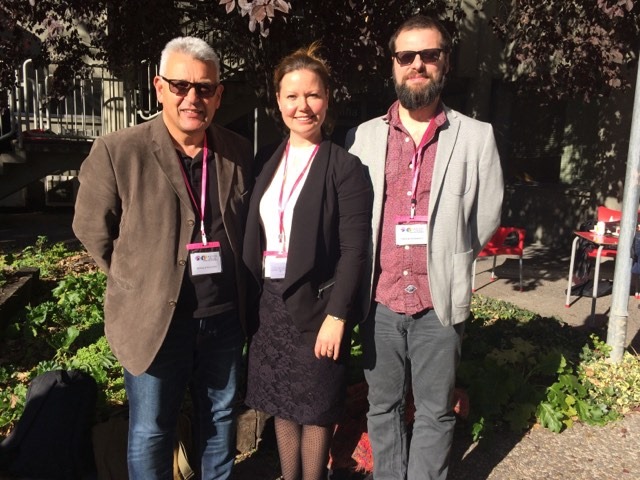
It was around this time that that we really started working with Ronald. His turn towards social justice gave us confidence that this was possible. Career guidance could be about more than just managing oppression and transforming yourself into a good neoliberal citizen. It could be something critical and emancipatory.
Ronald became our friend, mentor and spiritual guide. Working with him was always a broad education, as he brought discussion of the arts, philosophy and the world to our many talks on life in academia and beyond.
Ronald became an academic inspiration to us. His vision and ambition were wide and focused on changing the world, his knowledge of theory and research second to none, and he was able to combine all of this with excellent scholarship and high quality technical and human skills as a writer and an editor, attentive to the development of the texts as well as of the authors. He was especially supportive to those who were new to publishing academic work and those for whom publishing in English was a new experience. His commitment to ensuring that there was a chance for new voices and voices from beyond the Global North to be heard was central to his generosity as an editor and a mentor. Throughout his life, he continued to look for inspiration to critique the world as we know it and was always encouraging us, through research and scholarly debate, to imagine a world as it could be.
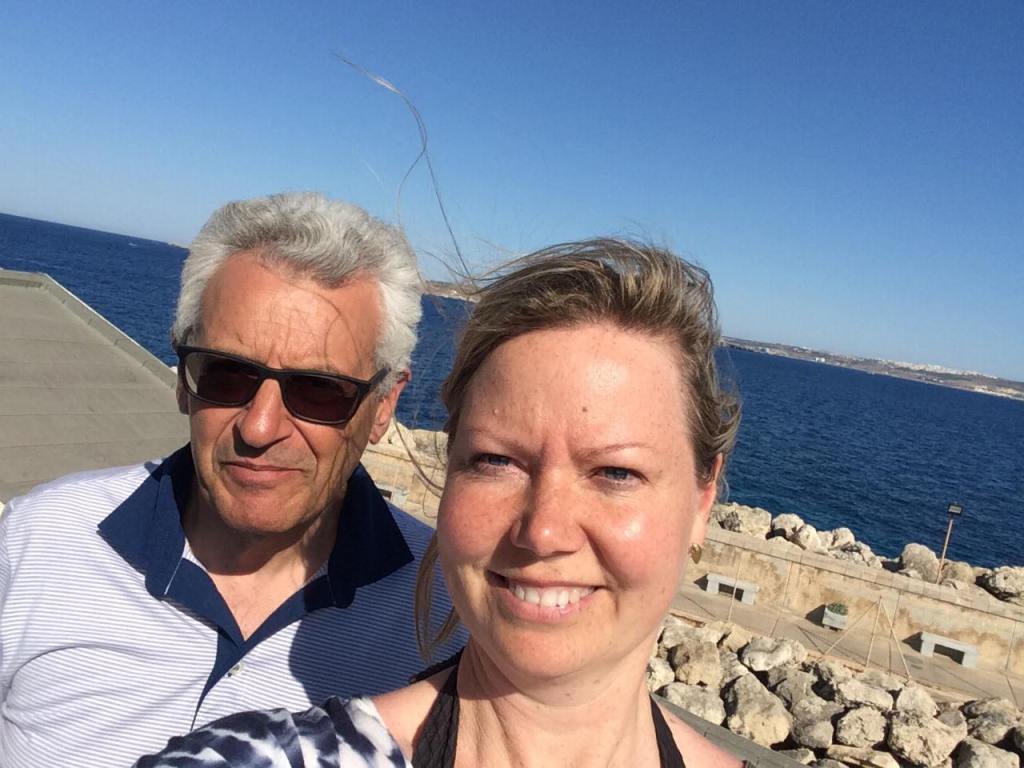
Together we worked on numerous projects. A special issue of the NICEC journal, the two edited collections Career guidance for social justice and Career guidance for emancipation, the creation of this blog and the development of the five signposts for social justice framework. We also had the opportunity to work together on the ECADOC summer school in 2019 which was one of the best weeks of all of our professional careers, even though Ronald sadly injured himself at the end of the week as he rode his scooter between looking after his elderly father and running the summer school. Balancing family and work was always a theme in Ronald’s life and work, and something that we were both privileged to learn from.
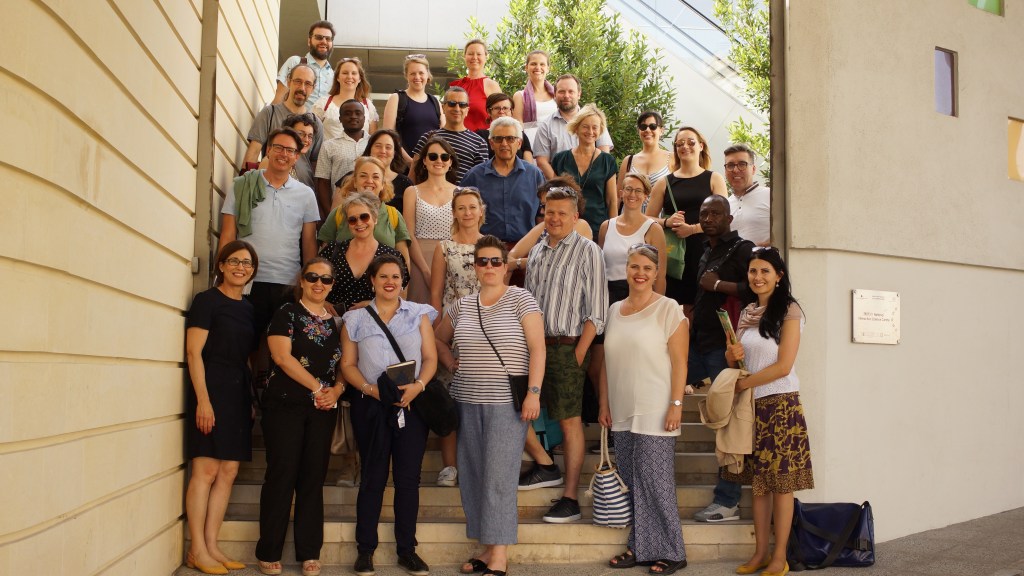
We continued to talk throughout the Covid-19 lockdowns, writing a piece on what we thought the implications of Covid would be, that was translated to many languages and experimenting with recording a podcast. But mainly we just met from time to time to share our experience and try and figure out what was happening in the world and in our lives.
Ronald demonstrated amazing persistence in serving wider society through research. His work gave voice to marginalised and oppressed people and showed us how to strive for common good. In some of his most recent work he has argued for a postcolonial turn in career guidance, written about the need for career guidance for migrants, chided us all for using ‘dirty words’ like ‘vulnerability’, ‘resilience’, ‘employability’, and ‘activation’ without thinking about what they really mean and written about career guidance in multi-cultural societies. In February 2023 he gave a lecture at the national career guidance day in Denmark and an interview to the national guidance magazine. The title of the interview was: ‘You can call it leftish, if you like – I call it human’.

So, what is now to be done?
Ronald’s passion and ethical approach to research kept us on our toes, but for now, the loss and realisation that he is no longer there has pushed us on our heels.
True to Ronalds legacy we cannot stay here for long, we will continue his tireless work of scholarly writing and debate in journals, projects and on the blog, we founded together, which is now supported by a whole team of editors. True to Ronald’s spirit, the opportunity to post is open to all.
As an inspiration on a personal level, Ronald encouraged us to speak up about the hard times that we all meet in life. Sharing makes them a little easier and he was always there with a comforting word. His family meant everything to him. Even though he was still doing so many things as a scholar, in recent years, he had also started to slow down. He prioritised family visits to Rosaline’s family in France and being a grandfather to grandchildren in need of his care. He spoke with pride of his sons and their families.
Ronald taught us a lot, he listened to our ideas. Together we felt like the three musketeers, and that is also how he always spoke about our collaboration. Now only two musketeers are left. Leaving behind that metaphor. So, we must find the courage to continue Ronald’s legacy of solidaric critique in the field of career guidance research, practice and policy.
The fight for justice goes on, inspired by the memory of Ronald. We hope that others will continue to join us as we all move forwards together.
People who want to leave condolences or share memories of Ronald are invited to do so on the site Ever Loved.
The Puttinu Cares Foundation, a charity that supports and advocates for sick children, was very close to Ronald’s heart. A donation page in loving memory of Ronald Sultana has been set up for those who want to donate.
 Critical Perspectives on Career and Career Guidance (COCAG)
QEPD 🕊 🕊 🕊
LikeLiked by 1 person
[…] innocent words are carrying a lot of problematic ideological baggage. In the year in which we lost Ronald, this piece reminds us of why his voice was so […]
LikeLike
[…] Ronald Sultana died at the end of 2023. I’ve co-written an obituary with Rie Thomsen on the career guidance for social justice website. But, there is a lot more to say. So I want to devote some time this year to remembering Ronald and […]
LikeLike
[…] the history of Palestine and the current situation in the country. In it he remembers the work of Ronald Sultana, who was a lifelong advocate for […]
LikeLike