
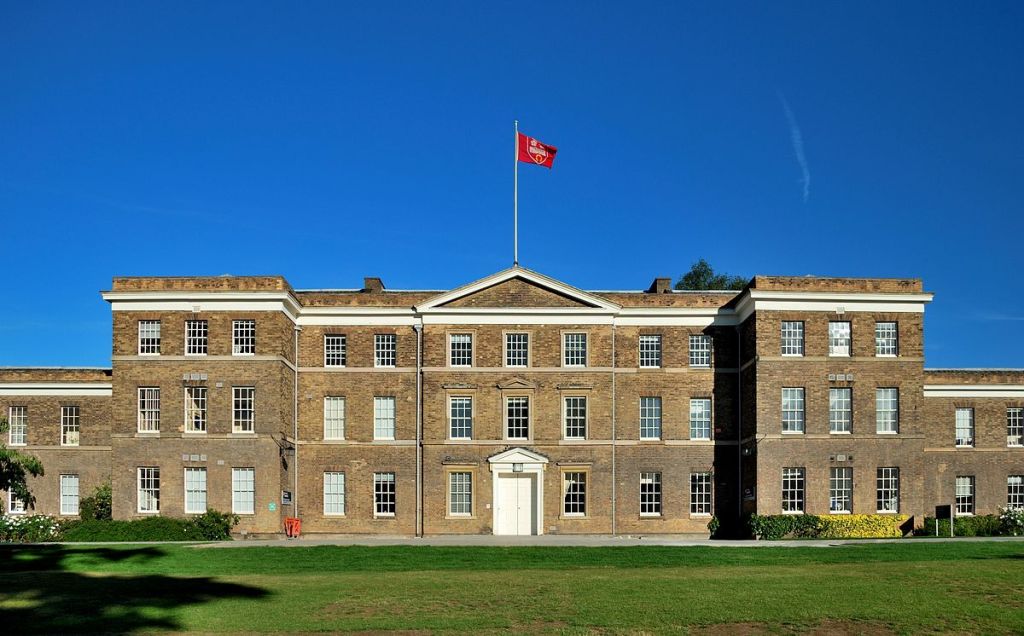
Recent events at the University of Leicester have been gaining a lot of attention in the media. In this article Dr Deborah Toner, who is the Campaigns and Social Media Officer for the Leicester branch of the University and Colleges Union (UCU) and Associate Professor of History, explains what is going on.

Anyone who’s seen the recent social media feeds of numerous University of Leicester employees, the Leicester UCU trade union branch, and various allies – some of which have made the national news – could legitimately wonder: what on earth is going on down there?
Staff are in open revolt: they have declared a vote of no confidence in the Vice-Chancellor, Nishan Canagarajah, and his entire executive board (as have the Students Union). Staff have voted for sustained industrial action, due to begin on 4 May 2021. And staff have called on national UCU to instigate an academic boycott of their institution. Why?
Redundancy and restructuring
Since October 2020, staff in five academic departments – English; Business; Informatics; Mathematics & Actuarial Science; and Neuroscience, Psychology & Behaviour – and three professional services units – Education Services; Library User Services; and Estates & Digital Services – have been subject to a staggeringly dishonest and incompetent change consultation process. In January 2021 – on the first day of the University’s teaching term – 145 staff in these areas were put at risk of redundancy, as part of a plan insultingly called “Shaping for Excellence”.
Part of the rationale for redundancies in the academic departments has rested on spurious assertions about the supposed lack of ‘relevance’ of their teaching and research portfolio. ‘Relevance’ has been used as a cypher for, variously, popularity amongst the student body, the ease with which curricula can accommodate employability and career development, and how mechanistically research can be commodified and applied to the needs of business. English language and medieval literature specialists – whose work on the landmark discovery of King Richard III’s remains the university’s PR machine continues to laud – will be axed to make room for ‘enhanced employability provision’.
Pure mathematics is apparently an abstract luxury we can no longer afford, although as recently as 12 April 2021 our students were busy demonstrating the inextricable relationship between pure and applied mathematics in their work with local police forces.
The declaration that Critical Management Studies and Political Economy have no ‘practical relevance’ in a mainstream Business School came as a ‘genuine shock… in light of the current financial, ecological, and political crises” facing planet earth to an external examiner who resigned in protest.
Frontline staff in the university library were placed at-risk of redundancy just days after being designated “key workers” for the latest COVID lockdown. Pedagogical experts in the Leicester Learning Institute, who made our rapid pivot to online and blended learning in 2020 possible, have been deemed surplus to requirements too. Along the way, the architects of these proposals have revealed their profound ignorance of how scholarship, research and curriculum development works.
Targeting critics
Tens of thousands of concerned scholars and students from the international community have written, individually and collectively, to the university’s senior executives criticising these destructive proposals, and have received dismissive, borderline insulting replies. Staff within the University of Leicester who have publicly criticised the plans, and the leaders executing them, have received a more robust – yet more insulting – response.
In March 2021, when they could have been negotiating with the Leicester UCU to develop alternatives to redundancies, senior executives of the university began trawling social media and taking offence at specific words being used by their staff to interrogate their plans. Allusions to Kafka, Orwell and Solzhenitsyn, metaphors involving sheep, monkeys and organ grinders, and dastardly individual words such as jackboot, chicanery and putsch have been cited as the basis for disciplinary investigations under the auspices of the university’s Dignity and Respect policy.
The cynical manipulation of this anti-bullying policy to further browbeat staff is somewhat ironic, given the blatant targeting of trade unionists within the redundancy proposals. This is most obvious within the Business School, where half of the sixteen initially pooled for redundancy, are or have been Leicester UCU branch officers or departmental representatives. Should the redundancy proposals be implemented as they currently stand – with termination dates in early August – the university executive board will be getting rid of the Leicester UCU branch Chair, Vice-Chair, Pensions Officer, and Professorial Staff Representative, along with several departmental representatives. We further suspect that trade union activists and officers whose jobs are not at risk of redundancy, but have been vocal in publicly opposing redundancies, have been disproportionately reported by senior managers under the Dignity and Respect policy and subjected to various forms of soft harassment.
A widening chasm between management and staff
Such crass attempts at intimidation have only served to widen the chasm between the senior executives’ excuse for a future vision of this university and what its staff, students and colleagues around the world are trying to defend. What Vice-Chancellor Nishan Canagarajah calls ‘excellence’, thousands of alumni, former employees, external examiners and colleagues have called ‘cultural vandalism’, ‘seriously flawed’, ‘truly shocking’, a ‘profound strategic miscalculation’. Staff have become ill as a result of the stressful consultation process, on top of an already exhausting year; others have accepted voluntary redundancy. A significant number of staff whose jobs were not on the line have resigned, and others will surely follow.
In consequence, when the consultation process comes to an end in early May, the final number of compulsory redundancies will likely be significantly less than the 145 placed at risk in January. The university’s senior executives will likely try to claim that this is the result of their efforts to mitigate against job losses. Let the record show that transforming the university into a place where talented, conscientious staff, some with decades of service, can no longer bear to work is shaping for disaster, not excellence.
Disregard for staff
If you haven’t yet read the correspondence between Professor Gibson Burrell, one of the internationally acclaimed scholars earmarked for redundancy, and Vice-Chancellor Nishan Canagarajah, you could find no better illustration of the monumental disregard for staff, scholarship and the university’s integrity at the heart of the ‘shaping for excellence’ program. As Professor Burrell writes:
“I am truly sorry that the University of Leicester has come to this; where even mediocrity is a dream to aspire to, where lies and half truths masquerade as knowledge, where academics seek to frighten other academics about what they research and how they can research it, where the closing of ears is the chosen way by senior managers to solve problems, where being critical of management is not acceptable… it is in line to be the first British University to fail in centuries.”
I find it impossible to disagree.
 Critical Perspectives on Career and Career Guidance (COCAG)
[…] has refused to consider negotiating alternatives to the proposed redundancies. They have shown a complete disregard for staff views and the negotiating efforts of the UCU. And it may not seem like it, but ASOS is also […]
LikeLike
[…] account of the struggles over employment and academic freedom at the University of Leicester. What is going on at the University of Leicester? As the UK’s University and College Unions is going back into dispute next year, we may well […]
LikeLike