Late last year Dr Candy Ho presented at the Australian NAGCAS virtual conference and I thought her work including SDGs in her career teaching was really interesting – so we did a virtual interview by email! This post also links to @Aditiarur‘s post on a sustainable development approach to career guidance in India which I recommend you check out!
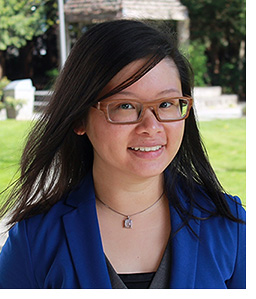
- Who are you? Where do you live and work? How did you get involved in career guidance? Can you describe your practice context? What group do you work with? Who is funding what you do? Where does it take place?
I reside in Canada’s beautiful province of British Columbia, in the unceded territory of the Musqueam, Squamish, and Tsleil-Waututh Indigenous Nations. I currently hold teaching roles in several post-secondary institutions:
- Assistant Professor, Integrative Career and Capstone Learning, University of the Fraser Valley (UFV)
- Instructor, Educational Studies, Kwantlen Polytechnic University (KPU)
- Instructor, Career Development Practitioner Program, Douglas College
The way I “blend” my professional roles enable me to work with a variety of individuals, from students in the final years of their undergraduate studies, to Indigenous Peoples training to become Career Development Practitioners in their communities. I am reminded on a daily basis that this is a privilege, and in return, also the responsibility I have to be in service of others.
True to Krumboltz’s planned happenstance theory, I stumbled upon the career guidance profession when I volunteered as a peer career educator at my alma mater. I discovered I had a knack for helping people with their career exploration and planning, and to my pleasant surprise, I could do this for a living! The rest, as they say, is history.
- How do you see social justice? What role do you think that it has in career guidance practice?
I think of social justice as our individual ability to equally participate and contribute in our society. In particular, I subscribe to Martha Nussbaum’s definition of basic social justice where “the key question to ask, when comparing societies and assessing them for their basic decency or justice, is, ‘What is each person able to do and to be?’” (Nussbaum 2011, p. 18).
Based on this definition then, career guidance plays a tremendous role. The work that we do helps people realize their strengths and capabilities and consider how they can be applied in their work and life roles. By the same token – and more important than ever – career guidance calls for people and societies to do and be better in addressing issues in equity, access, and wellbeing.
- What did you do? How did your practice work? Who delivered it? What resources did they have? How long did it take? How did it advance the social justice agenda?
- Why did you do it? What were you specifically trying to change or challenge? How does it relate to social justice? Is it connected to particular policy or organisational aims? What inspired you or influenced you? Have you been involved in any training on social justice? Did you reach out and connect to any individuals, organisations or campaigns to help you in your practice?
- What went well? What aspects worked effectively? Did it meet the aims that you were hoping for? Did participants like it? Did the participants benefit from being involved? Did you change or challenge any structures that might make a difference for the future?
Currently I teach final year capstone courses on post-university transition/career mobility at UFV and KPU. In recent years, I have been using the United Nations Sustainable Development Goals (SDGs) as a framework to help students consider their purpose and it might align with their career aspiration(s).

Throughout the course, activities and assignments are designed to have students consider:
- What is the world that they want to live in?
- What do they see are the global problems or opportunities that need their attention?
- What are their talents and experiences that may help address these problems, and in turn improve the condition of our world?
Typically, students arrive at the course with predetermined occupations without having explored the full array of career options available to them.
The SDGs challenge students to think beyond their initial plans and furthermore articulate how their professional and personal endeavours would help advance these global goals. As a result, by the end of the course, they have effectively broadened their career management ‘toolkit’ to encompass both short- and long-term actions that align with their raison d’être (as they compose their personal mission statement as a course activity).
I believe incorporating the SDGs into my career capstone courses make the goals accessible to students. In their final reflections, they often share they initially found the SDGs daunting (“What can one person really do to eradicate poverty and foster peace?”) and they come out of the course identifying concrete actions they are taking to advance the SDGs they chose AND the implications of their actions. They realize that change happens one person at a time, and that they can lead this change with their own actions.
Finally, I use open educational resources in these courses to make content and learning accessible for students. I see this as a way to help advance SDG 4, Quality Education.
- What did you learn? What went wrong? What surprised you? What barriers did you experience? Did anyone try and stop you from doing what you did? Would you/do you do it again?
I have continued to incorporate the SDGs in my career courses and learn from the process; the practice has been well-received by my students, colleagues at both institutions, and colleagues from career development professional associations. I presented my course recently at Australia’s National Association of Graduate Careers Advisory Services Conference and have been invited to share my experience with colleagues around the globe. An upcoming priority is to draft a literature review pondering connection between SDGs, career development, and the curriculum.
- What advice would you give to others if they wanted to do something similar? What else do you want to tell us?
Use the SDGs for career exploration and purpose. If you have students/clients unsure about what occupations they want to go into, you can use the framework and ask them, “What is a cause you are keen to advocate for?” And engage in a conversation about their purpose and passion. From there, you can work together to identify professional roles and organizations they might want to look into.
On the other hand, if you work with individuals already certain about the occupations they want to go into, help them expand their thinking by asking: “Which of the SDGs do you think you can contribute to in your desired occupation, and how so?” By doing that you have effectively helped them connect their career aspiration to a bigger purpose, and helped them articulate that purpose when applying and interviewing for role.
Twitter: @CanceHo
LinkedIn: https://www.linkedin.com/in/candyho1118/
 Critical Perspectives on Career and Career Guidance (COCAG)
It is also worth looking at Pete Robertson’s piece on the SDG and career guidance policy https://careerguidancesocialjustice.wordpress.com/2020/11/24/public-policy-for-career-guidance-imagining-a-more-ambitious-agenda/
LikeLiked by 2 people
[…] (4) Back in February Lizzie Knight interviewed Candy Ho about her work with the UN Sustainable Development Goals. The SDGs for career exploration and purpose – interview with Dr Candy Ho. […]
LikeLike
[…] Canadian academic and career development specialist Candy Ho was interviewed for this blog over a year ago, which is how I found out about her work using the UN Sustainable Development goals […]
LikeLike
[…] over the last few years. In this post Lizzie Knight interviews Canadian career development expert Candy Ho about the way that she has used the SDGs in her […]
LikeLike
[…] should serve communities around the world. My amazing friend and colleague, Dr. Candy Ho, aligns career exploration and purpose with the United Nations Sustainable Development Goals. Dr. Ho builds on these ideas in her CERIC perspective (she is Chair of the […]
LikeLike